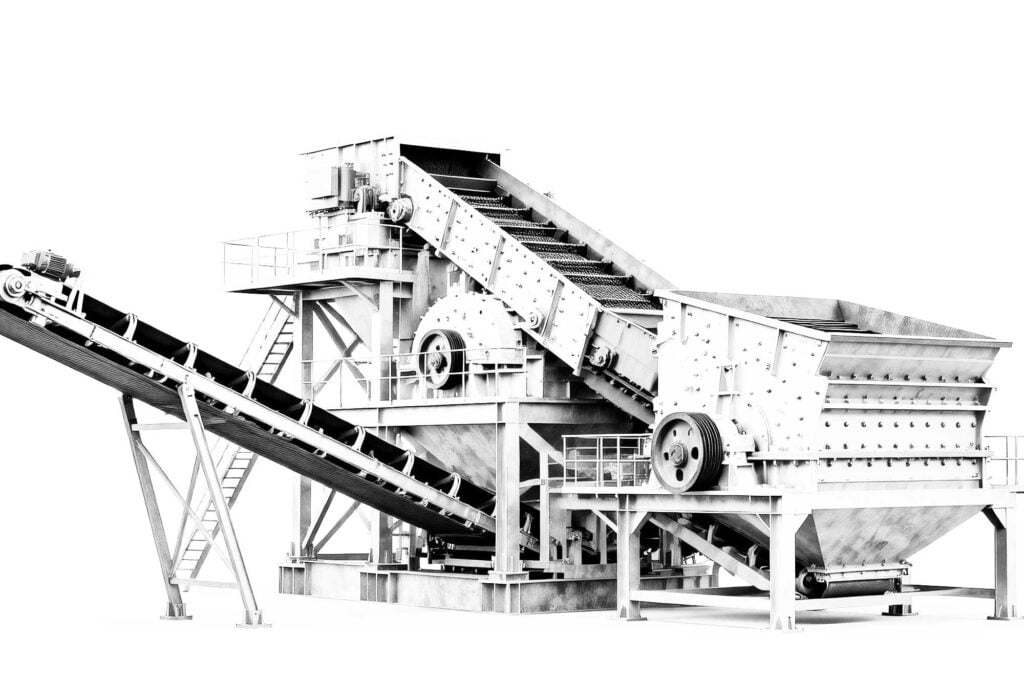
Mining Material Classification Solutions
Mining Vibrating Screens
ZME screening equipment is engineered to provide high separation precision and exceptional durability in harsh mining environments. With a reinforced structural design, our vibrating screens ensure accurate aggregate classification, enhancing crushing circuit efficiency and minimizing material contamination.
How It Works?
The vibrating screening process is a mechanical method that utilizes screening media on a vibrating screen to classify materials based on grain size through vibratory force.
This classification process is typically used for material sizes ranging from 1–300 mm, yet it is also capable of handling fine particles down to 0.05 mm or even smaller.
Based on its operational function, the screening process is divided into two primary categories: Scalping (Pre-Screening) and Final Screening. Scalping is performed as an initial stage to ensure subsequent crushing or separation processes run effectively and efficiently, such as in mineral processing plants where rocks are categorized by size classes. Final Screening is the stage where the output directly becomes a finished product; in coal washing plants or quarries, for example, material is separated into various size fractions ready for immediate market distribution or use.
What Is
Mining Vibrating Screen?
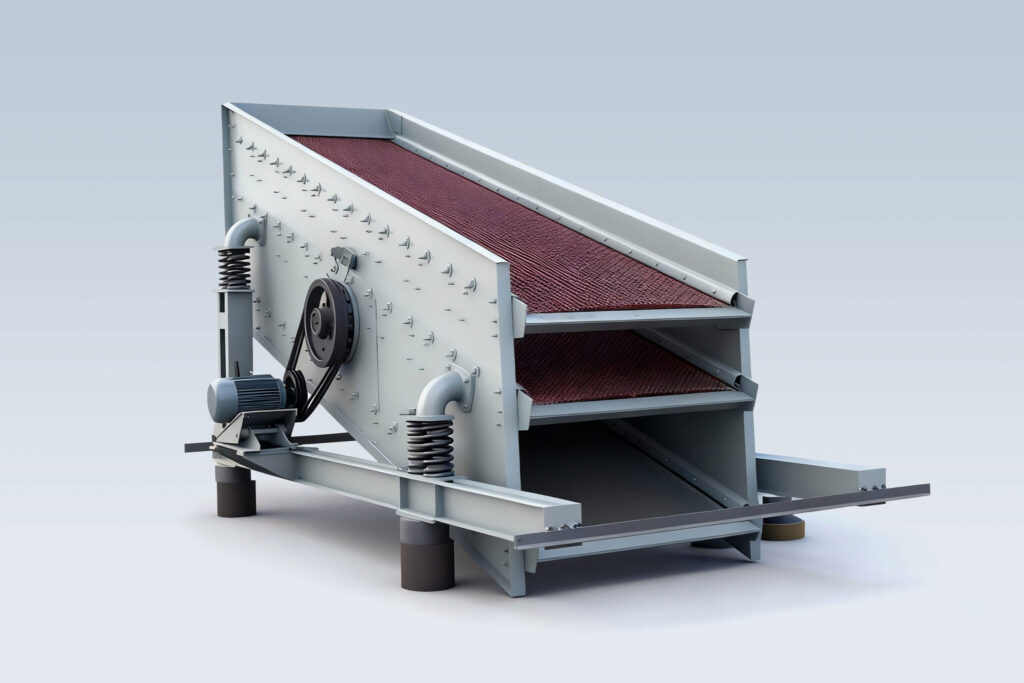
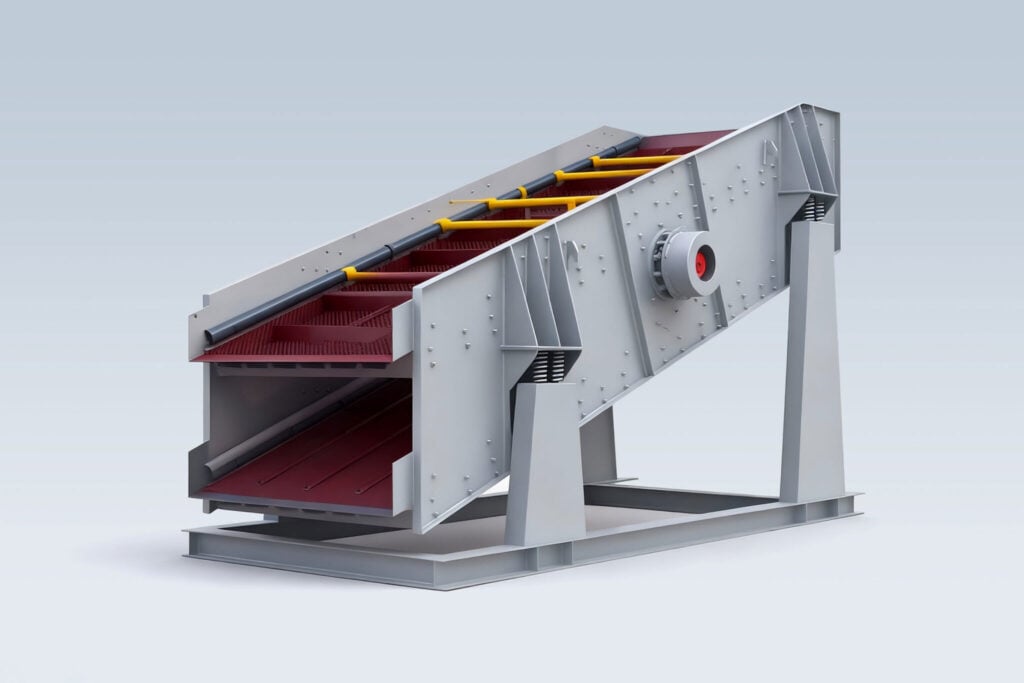
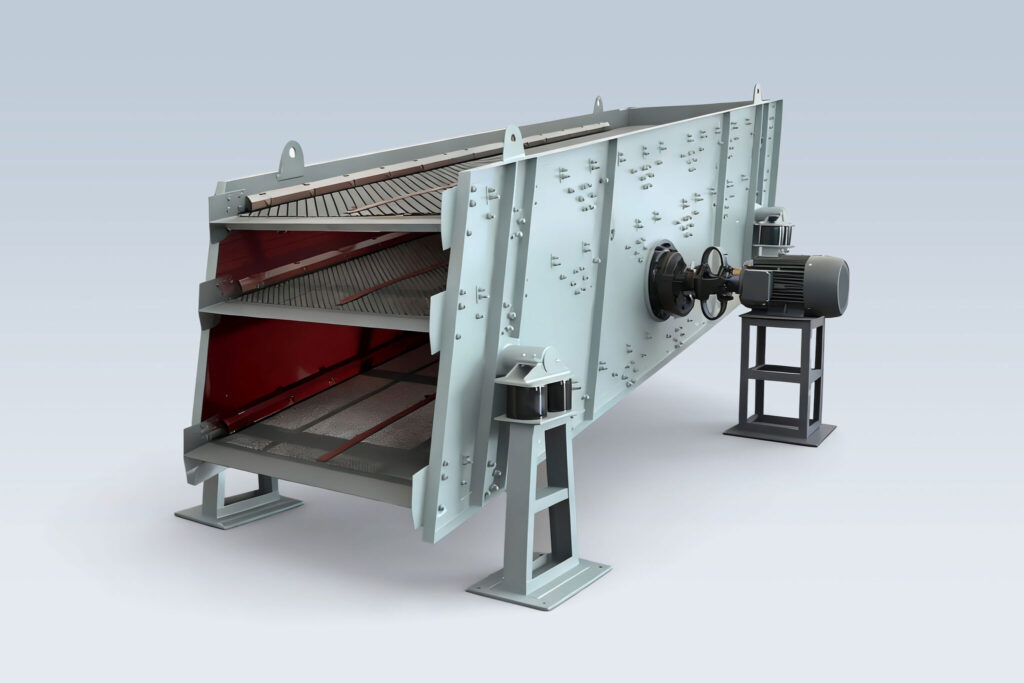
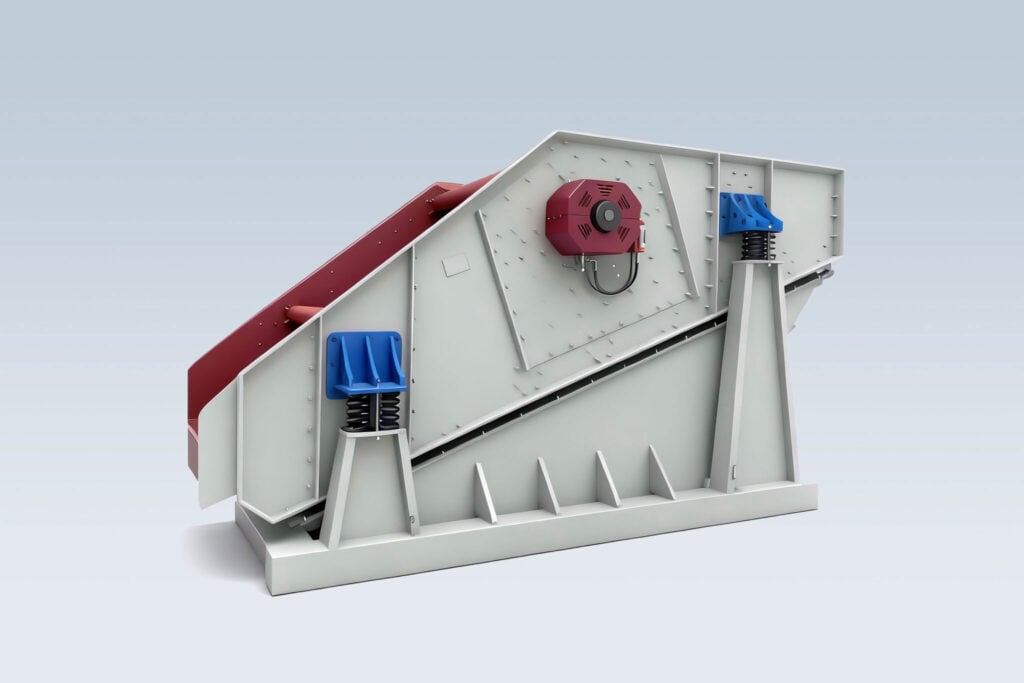
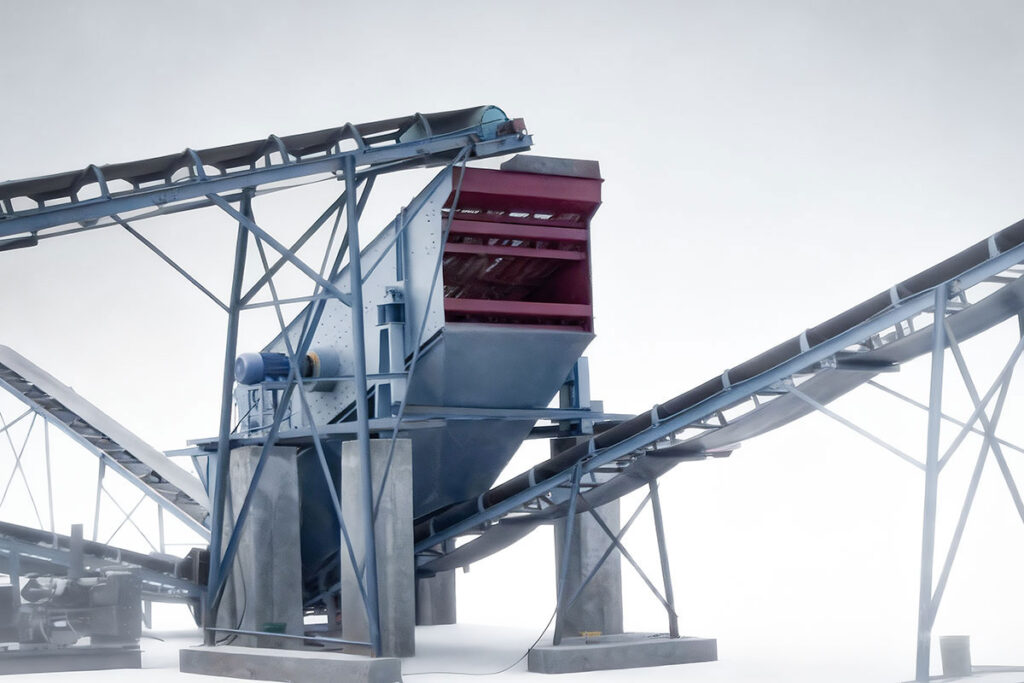
ZME heavy-duty vibrating screens are large-scale screening solutions specifically engineered for mineral processing and stone crushing circuits within aggregate production lines. As a specialized type of inclined vibrating screen, this equipment utilizes periodic mechanical vibrations to create relative motion on the screening media. Under the combined influence of gravity, inertia, and friction, mixed materials—including solids, liquids, and powders—are precisely separated and classified based on their specific particle sizes.
Designed for multi-stage classification, these mining screens are widely used in crushed stone aggregate lines within the mining and quarrying sectors. The equipment maintains high stability while handling materials ranging from 5–300 mm, separating them into various finished product fractions through single or multiple screening stages.
Note: During primary or secondary crushing stages, material from a Jaw Crusher or Cone Crusher is fed into these mining screens for classification. Featuring a circular motion trajectory and 1–4 deck configurations, this equipment is purpose-built for heavy, medium, and fine sizing. Classified materials are then transported via conveyors to the next crushing stage or a VSI sand maker, while oversized material is returned to the crusher for re-processing within a closed-circuit system.
How It Works
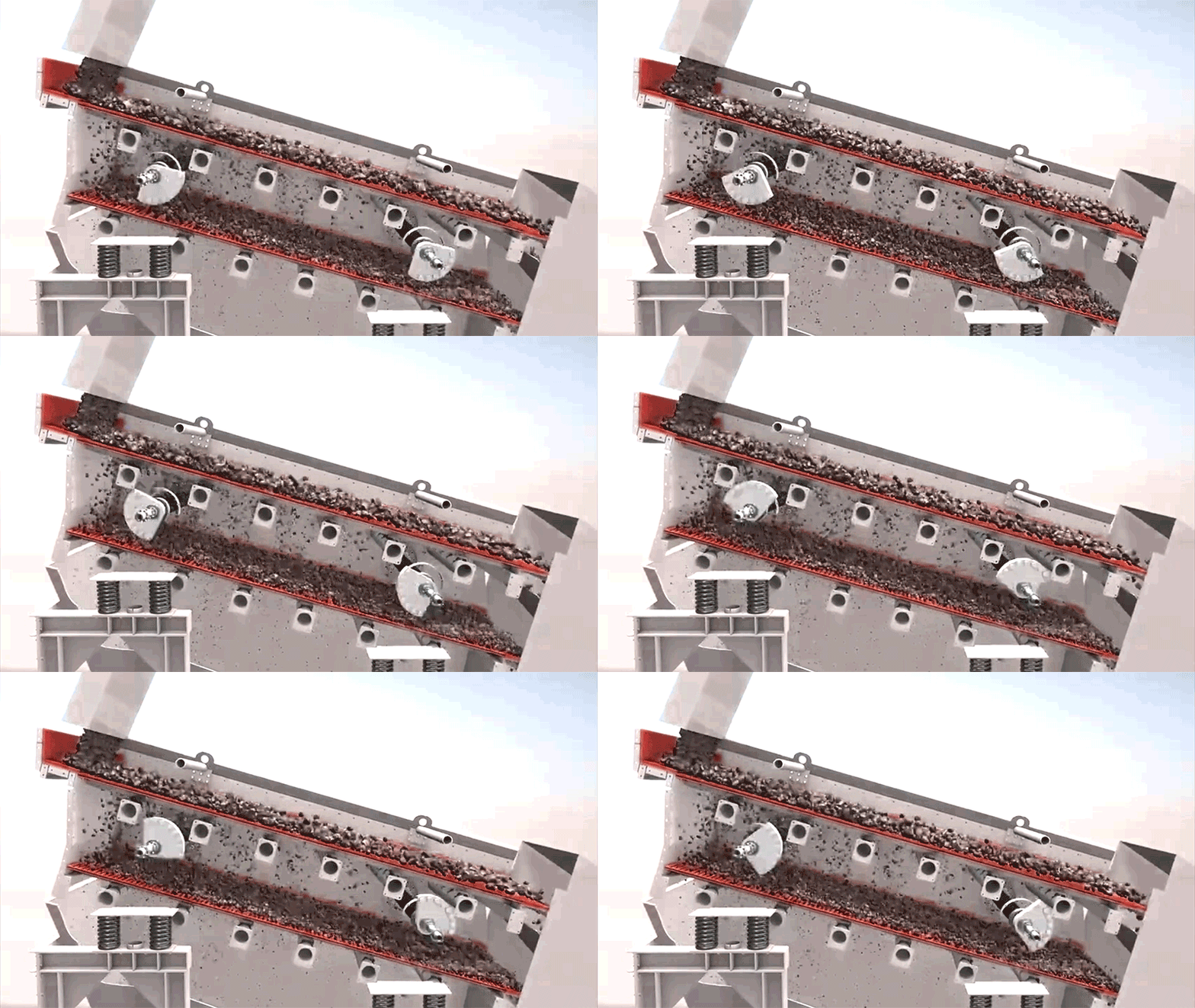
Operating Principles of Screening Equipment Vibrating screens are vital components in mining and quarry operations, particularly the inclined vibrating screen designed for high performance. Utilizing a heavy-duty design, this equipment leverages vibratory force from an exciter, causing the screen body to move periodically in a circular or linear pattern. During the mineral processing stage, materials such as stone, gravel, and sand move across the screening surface; fine particles pass through the mesh, while coarse particles move toward the discharge end. This ensures accurate and efficient material separation and classification based on size.
Inclined / Circular Vibrating Screens These screens generate a circular motion on the screen body, causing materials like crushed stone, gravel, and sand to rotate and toss constantly. This motion pattern is highly effective in preventing mesh blinding (clogging), making it ideal for sizing materials in demanding mining and quarry environments.
Inclined / Circular Vibrating Screens These screens generate a circular motion on the screen body, causing materials like crushed stone, gravel, and sand to rotate and toss constantly. This motion pattern is highly effective in preventing mesh blinding (clogging), making it ideal for sizing materials in demanding mining and quarry environments.
Horizontal / Linear Vibrating Screens Equipped with double vibrators or eccentric blocks, this equipment produces a straight linear motion. Material moves forward linearly while being lifted off the screen surface. Screening efficiency is fully controlled by adjusting the amplitude angle and vibration frequency. This type is ideal for processing aggregates, sand, and other construction materials requiring high separation accuracy.
- Circular Trajectory Screening Material follows a spiral or circular path generated by a combination of gravity, inertia, and centrifugal force. This pattern ensures the material continuously rotates over the screen surface, making it exceptionally effective for the rapid separation of coarse materials.
- Linear Trajectory Screening Material moves linearly or nearly straight along the screen deck and spreads evenly across the entire width of the screening surface. This design is best suited for materials that require a longer retention time to achieve more accurate separation.
Two Core Models
ZME Inclined Vibrating Screens
ZME provides premium solutions for mineral processing and aggregate production through its two primary vibrating screen series. The YA and YK series are engineered with rugged heavy-duty specifications, making them the ideal partners for stone crushing units in handling extreme workloads. By adopting an inclined design, this equipment ensures rapid material flow and high screening accuracy, delivering maximum efficiency for every mining operation.
YA Series Inclined Vibrating Screen
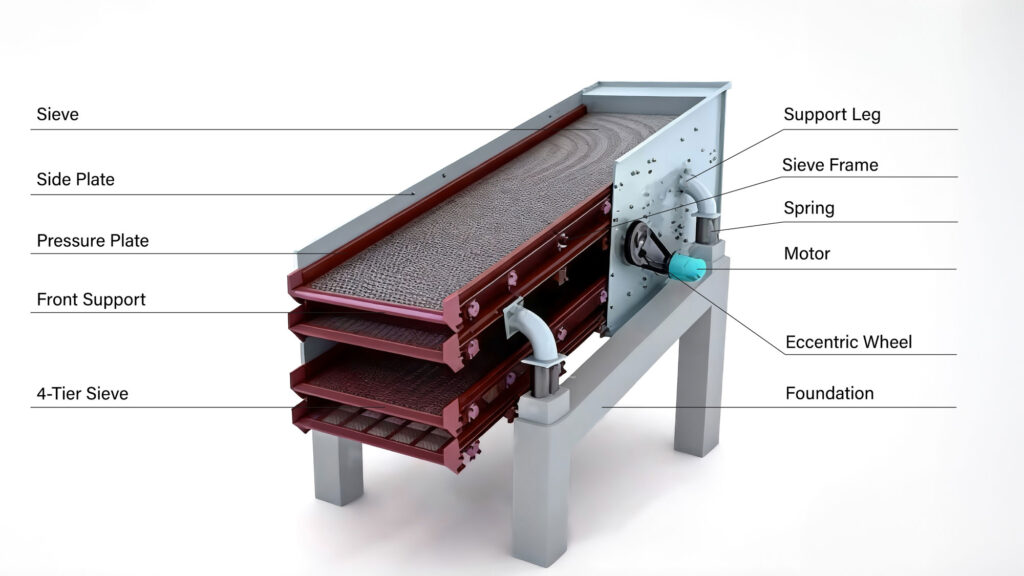
The YA / YAS Series circular vibrating screens offer a processing capacity range of 20–1200 t/h, available in 2 to 3 deck configurations, with screening surface dimensions ranging from 1200 × 3600 mm to 3300 × 9000 mm. Equipped with motor power up to 45 × 2 kW and a standard inclination angle of 20°, this series is designed for efficient material sizing in stone crushing and rock mining operations.
Click here to download product specifications
YK Series Inclined Vibrating Screen
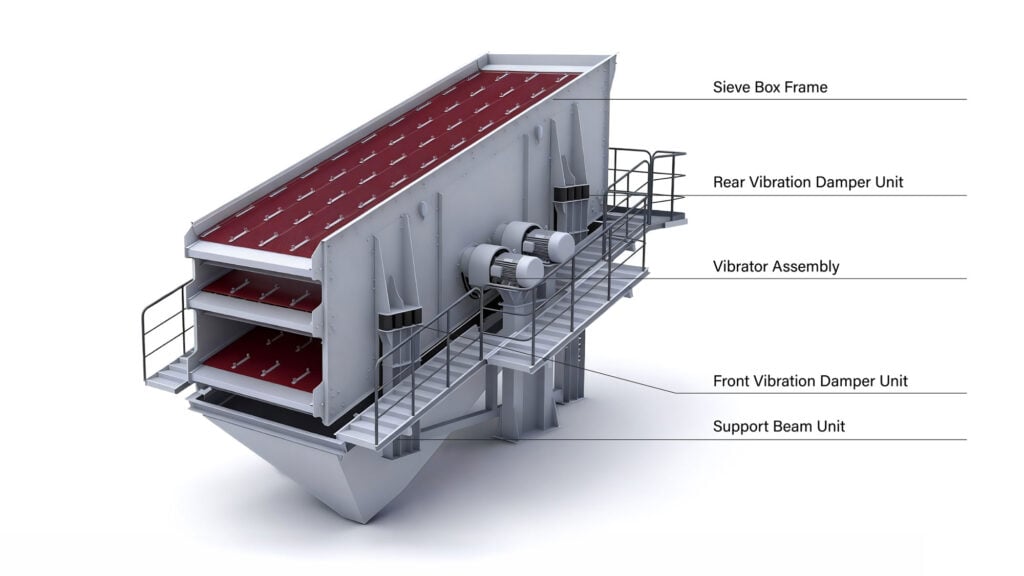
The YK / YKS Series circular vibrating screens feature a processing capacity range of 35–2000 m³/h, available in 1 to 4 deck configurations, with mesh opening sizes ranging from 5–150 mm. Powered by motors up to 55 × 2 kW and featuring a standard inclination angle of 20°, this equipment can handle
Click here to download product specifications
Aplikasi
Vibrating Screen Tambang
ZME circular vibrating screens feature precise screening capabilities and adjustable capacities, ensuring accurate material classification while maintaining smooth material flow within the crushing circuit. This allows for efficient separation of aggregate fractions and provides ideal feed conditions for downstream crushing equipment or final product processing within a stone crushing line.
In general, vibrating screens can be used for various classification stages, ranging from coarse scalping to fine product separation. However, in production practice, their applications are distinguished by operational scale and intensity:
YK Series (Heavy-Duty Inclined Vibrating Screen): Designed for high capacities up to 2000 m³/h, this series is the premier choice for medium-to-large scale projects. With rugged construction and high impact resistance, the YK Series is ideal for handling hard materials such as basalt, granite, and iron ore during the main screening stages.
YA Series (Inclined Vibrating Screen): Prioritizing stability and cost-efficiency, this series is better suited for smaller-to-medium projects or applications requiring standard classification. The YA Series is frequently applied to screening limestone, river stone, and other materials with medium hardness.
ZME YK and YA Series screening equipment combines high efficiency with maximum durability, providing a reliable solution for mineral processing and aggregate production. Through a standard 20° inclination angle and configurations of up to 4 decks, this equipment produces stable output sizes and meets strict grain specifications for highway construction, railways, and precast concrete.
Note: Processable materials include stone, limestone, gravel, river stone, quartz, basalt, iron ore, granite, shale, gypsum, and various other types of rocks and minerals.
Key Features and Performance
ZME YK & YA Series Vibrating Screens
The ZME YK and YA series are high-reliability circular vibrating screens specifically engineered for the mining and quarrying industries, focusing on structural strength, high efficiency, and long-term operational stability.
These inclined vibrating screens adopt a high-strength structural design utilizing weld-free (or minimal welding) connection technology, which significantly enhances the equipment’s integrity and reduces the risk of fatigue cracking in the body frame. With powerful excitation force and a stable circular motion trajectory, this equipment ensures efficient material separation and a smooth, clog-free material flow.
Optimization of the screening surface design and multi-layer configurations (1–4 decks) effectively expands the productive screening area. This enables higher processing capacities for various types of crushed stone, mineral ores, and sand or gravel aggregates, delivering more uniform product sizing.
Processing Capacity: Up to 2000 m³/h, making it ideal for both primary and secondary screening applications that demand high productivity and economical maintenance costs.
5 Key Differences
ZME Mining Vibrating Screens
In mining and quarry applications, the YK Inclined Vibrating Screen focuses on powerful excitation and high-impact heavy-duty coarse screening. In contrast, the YA Inclined Vibrating Screen is better suited for continuous aggregate production and mineral processing lines that require high stability, low noise, low operating temperatures, and superior maintenance efficiency.
Excitation Mechanism (Vibrator) The YK Series utilizes eccentric blocks to generate powerful vibratory force, while the YA Series adopts an eccentric shaft design with thin oil lubrication for cooler and more stable operation on the inclined vibrating screen.
Transmission & Coupling Systems As a heavy-duty vibrating screen, the YK Series relies on flexible tire couplings. The YA Series employs specialized couplings or V-belts to protect the motor during high-load operations within the stone crushing circuit.
Vibration & Noise Dampening YA Series mining screens are equipped with rubber springs to reduce noise and dynamic loads. Conversely, the YK Series uses standard steel springs to support more aggressive load capacities.
Maintenance Efficiency (Downtime) The YA Series excels in mineral processing due to its modular vibrator design, which can be replaced as a complete unit within 1-2 hours. This provides significantly better maintenance efficiency compared to standard structures.
Construction & Body Durability Both inclined vibrating screen series utilize weld-free rivet connections. However, the YA Series emphasizes cold-worked, single-piece side plates to achieve maximum fatigue strength and structural integrity.
FAQ
How many crushing stages are typically required at a mining site, and what are the equipment and output sizes for each stage?
Rock crushing is generally divided into three main stages:
- Common equipment: Fine-type Cone Crusher, Vertical Shaft Impact Crusher (VSI).
- Primary Crushing
- Feed size: 800–1500 mm
- Product size: 150–300 mm
- Common equipment: Jaw Crusher, ideal for handling very hard and large-sized rocks and ores.
- Secondary Crushing
- Feed size: 150–300 mm
- Product size: 50–80 mm
- Common equipment: Cone Crusher, Impact Crusher.
- Tertiary Crushing
- Feed size: 50–80 mm
- Product size: 5–12 mm
- Common equipment: Fine-type Cone Crusher, Vertical Shaft Impact Crusher (VSI).
What is the best stone crusher for heavy-duty mining?
The best stone crusher for heavy-duty mining is equipment specifically designed to handle large, hard materials and continuous operation under extreme conditions. Typically, a Jaw Crusher is used for the primary stage, as it can break down massive rocks and ores into smaller materials, facilitating the next stages of the process.
For subsequent stages, a Cone Crusher or Impact Crusher is utilized to achieve more uniform product sizes and meet specific project specifications. Robust, reliable, and easy-to-maintain crushers not only maximize productivity but also reduce downtime, enhance worker safety, and lower long-term maintenance costs. Additionally, in heavy-duty mining, selection also considers energy efficiency, daily capacity, final product size, and the abrasiveness of the material.
How to choose the right crusher for a quarry?
Selecting the right crusher depends on material characteristics, feed size, required capacity, and the final purpose of the crushed material. For large-scale quarries, a combination of several crusher types in a multi-stage system is usually employed—for instance, a Jaw Crusher for the primary stage, followed by a Cone Crusher or Impact Crusher for the secondary and tertiary stages to achieve the desired size and a more uniform shape.
Furthermore, factors such as spare parts availability, ease of maintenance, energy efficiency, and operational costs are critical. The crusher must be capable of handling rocks with high hardness, medium-to-high abrasiveness, and consistent production capacity to ensure the quarry operates efficiently without interruptions.
What is the difference between a Jaw Crusher, Cone Crusher, and Impact Crusher?
- Jaw Crushers utilize the principle of compression to crush large, hard rocks and are typically used as primary crushers. They are ideal for rocks that are very hard, large, and have low-to-moderate abrasiveness.
- Cone Crushers leverage a combination of pressure and eccentric rotational motion, causing rocks to undergo compression and fracture to produce more uniform product sizes; they are often used in the secondary or tertiary stages. Cone Crushers are suitable for hard-to-medium materials and can produce products with good cubical shapes.
- Impact Crushers use impact and attrition to crush relatively soft or brittle rocks. They are frequently used for producing fine crushed stone, manufactured sand, and cubical aggregates with flatter shapes. Impact Crushers can reduce the need for additional grinding and improve the final grain shape.
- Summary of Key Differences:
- Impact Crusher: Soft/brittle rocks, secondary/tertiary stage or sand making, flatter grain shape, reduces additional grinding needs.
- Jaw Crusher: Best for large & hard rocks, primary stage, coarser product.
- Cone Crusher: Secondary/tertiary stage, hard/medium rocks, uniform & cubical product.
What maintenance practices are essential for crushers?
Proper maintenance is crucial for ensuring optimal performance and extending equipment lifespan. Essential practices include:
- Regular inspection of wear components, such as jaw plates, mantles, liners, and rotors, to ensure there is no excessive wear.
- Consistent lubrication of all moving parts to minimize friction and reduce wear.
- Cleaning the crushing chamber and work area to prevent material buildup that could damage the equipment or cause jams.
- Timely replacement of worn spare parts to maintain high efficiency and reduce downtime.
- Periodic checks of hydraulic and electrical systems (if applicable) to maintain safety and smooth operation.
Additionally, documentation and recording of all maintenance activities help operators analyze equipment performance and plan preventive maintenance more effectively.
How to operate a Jaw Crusher safely?
Jaw Crusher operation must be conducted with strict attention to safety and technical procedures:
- Inspect equipment condition before start-up; ensure the chamber is empty, connections are secure, lubrication is sufficient, and hydraulic systems are functioning normally.
- Do not exceed the maximum feed capacity, as this can damage jaw plates and the drive motor.
- Use protective gear and maintain a safe distance from the feed opening and work area while the equipment is in operation.
- Follow correct start/stop procedures and do not force the equipment to run under abnormal conditions.
- Mandatory operator training is required so that all staff understand the risks and control measures in the event of an issue.
By following these procedures, the crusher can operate efficiently, accident risks are minimized, and the lifespan of components is extended.